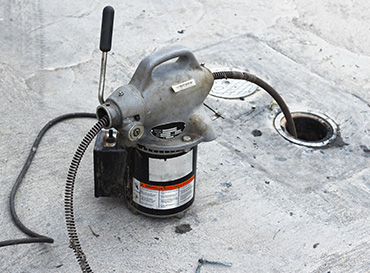
Accurately evaluating blockage prices is a critical practice in various industries, particularly in construction projects, water management systems, and other infrastructural undertakings. Understanding the methods and factors involved in price evaluation can help organizations allocate budgets effectively, ensure cost compliance, and identify efficient solutions. This guide highlights key practices employed to determine blockages prices (αποφραξεις τιμές), backed by data-driven insights and statistical methodologies.
Understanding Blockage Pricing Factors
The evaluation of blockage prices heavily depends on several influencing variables, each contributing to the total cost estimation. These factors include:
1. Severity and Type of Blockage
•
o
The complexity and size of a blockage significantly affect its pricing. For instance, a minimal residential pipe blockage will incur lower costs compared to large-scale blockages in municipal drainage systems. Studies show residential blockage resolution may range between $50 and $500, while industrial-grade obstructions can escalate above $5,000.
2. Material Composition
•
o
The type of material causing the obstruction (e.g., grease, debris, tree roots, or solid industrial waste) often dictates the resources and equipment needed. For example, removing grease buildup is less labor-intensive compared to removing tree roots, leading to varying costs.
3. Location and Accessibility
•
o
Blockages in hard-to-reach areas, such as underground pipes or remote facilities, increase labor efforts. Research indicates that inaccessible blockage resolution sees an average cost increase of 15% to 20%.
4. Labor and Specialized Equipment
•
o
Advanced technologies, such as hydro-jet machines or inspection cameras, are commonly required for comprehensive assessments. These specialized resources often carry premium costs, contributing to higher pricing structures.
Statistical Approaches to Price Evaluation
Organizations often rely on data-driven models to predict accurate blockage pricing. Key practices include:
Regression Analysis
This statistical method is frequently used to evaluate relationships between blockage variables (e.g., severity, location) and corresponding costs. Regression models offer predictive clarity, allowing companies to generate pricing ranges based on historical data.
Historical Benchmarking
Using data from past projects, businesses establish benchmarks for typical blockage scenarios. This approach identifies average costs for resolving similar issues, ensuring price consistency and reliability.
Scenario Modeling
Scenario models simulate diverse blockage conditions to estimate potential costs under various circumstances. These simulations allow contingency planning and accurate budget forecasting.
Summary of Best Practices
Organizations and individuals evaluating blockage prices should consider:
• Comprehensive Cost Breakdowns to account for material complexity and labor requirements.
• Data-Driven Tools like regression models to avoid underestimation or overpricing.
• Actionable Benchmarks derived from historical insights for goal alignment and decision-making.
By employing these proven methodologies, businesses can ensure precise and efficient blockage price evaluations aligned with industry standards.
A Guide to Practices for Evaluating Blockage Prices
Recent Posts
- Statistical Breakdown: Uptime and Reliability in Online Gaming
- Why 3D Graphics Are Redefining Slot Game Entertainment
- Understanding Reverse Osmosis Systems in Toledo: Key Insights and Statistics
- McKinney Estate Planning Services: Planning Today for a Secure Tomorrow
- BPC 157 UK Peptides – Research-Grade Peptides Delivered Safely